A family in Arizona found a camera disguised as a smoke detector mounted directly above their bed. A doctor in Glasgow hid pinhole cameras inside air fresheners in the bathroom. A landlord in South Carolina secretly recorded over 20,000 renters across two decades before anyone caught him.
Hidden cameras in hotels and Airbnbs aren't a paranoid fantasy. They're a documented, growing problem — and the platforms you book through aren't doing enough to stop it.
Here's how to find them, what the law says, and what to do if you discover one.
How common is this actually?
More common than you'd expect. A 2025 IPX1031 survey found that nearly 1 in 4 vacation rental guests reported encountering a hidden camera. A separate Vivint survey found 75% of guests now check for cameras on arrival — up dramatically from a few years ago.
Airbnb's own internal records, uncovered through court testimony and reported by CNN, show the platform received roughly 35,000 customer support tickets about surveillance devices over a ten-year period.
The economics make the problem worse every year. Spy cameras now cost under $30 on Amazon, record in 4K with night vision, and fit inside a USB charger. Camera lenses have shrunk to 1mm — the size of a pinhead. The hidden camera market was valued at roughly $2 billion in 2024 and is projected to more than triple by 2031.
Despite Airbnb banning all indoor cameras in April 2024, the same IPX1031 survey found 55% of hosts admit to still using indoor surveillance cameras. The policy exists. The enforcement doesn't.
Where hidden cameras hide
Modern spy cameras can be as small as a screw head. Many are built inside everyday objects. Knowing the common disguises is your first line of defense.
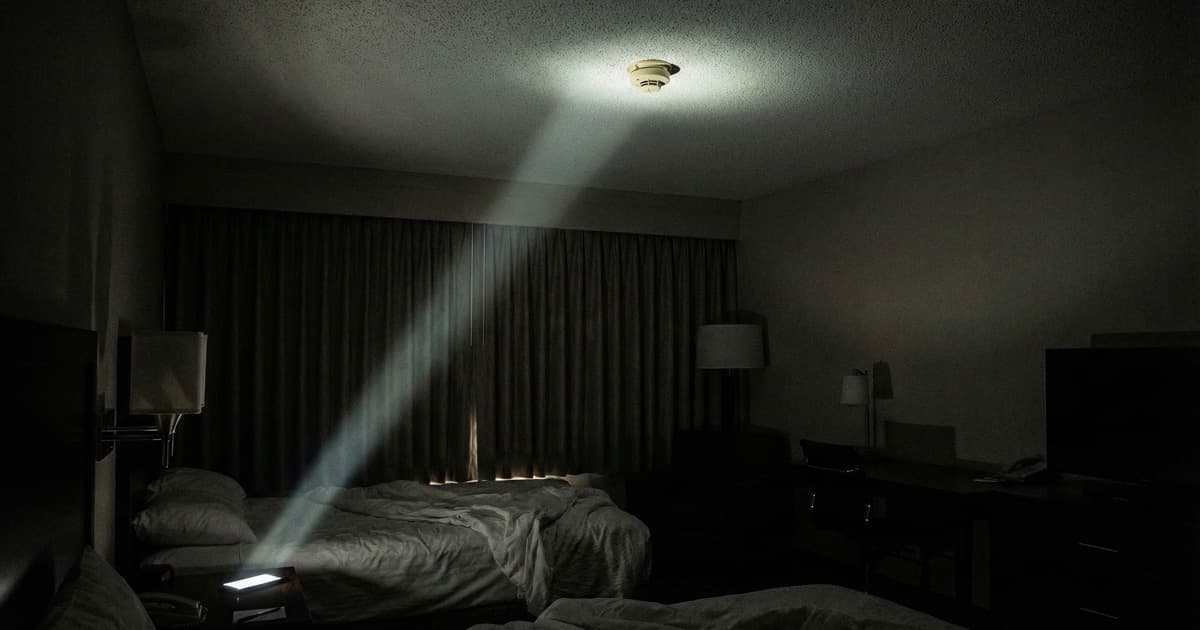
Electronics are the most common hiding spot. Smoke detectors top the list — they're ceiling-mounted, rarely inspected, and have a wide field of view. USB wall chargers that function normally while recording. Alarm clocks positioned on nightstands with a direct sightline to the bed. WiFi routers, Bluetooth speakers, digital clocks, and TV bezels.
Bathrooms are high-priority targets for voyeurs. Cameras have been found inside showerheads, bathroom vent grilles tucked behind slats, tissue boxes, and air purifiers. In the Glasgow case, a doctor specifically chose air fresheners because nobody questions their presence in a bathroom.
Decorative items and structural elements. Picture frames with a tiny hole in the artwork. Wall clocks. Artificial plants. Stuffed animals. Books on shelves. Coat hooks. Electrical outlets and wall plates that house tiny cameras. Even screw heads with embedded lenses.
The pattern to look for: any object that has a line of sight to the bed or shower, sits near a power source, and seems slightly out of place deserves a closer look.
How to find them: a five-minute sweep
No single technique catches every camera. The most effective approach layers multiple methods. Here's a practical protocol you can run in under five minutes with zero equipment.
1. Visual inspection (free, 60 seconds)
Before unpacking, think like a voyeur: where would you place a camera for the best view of the bed or shower? Scan for tiny holes in objects, unusual items that don't belong (an alarm clock in the kitchen, two smoke detectors in one room), faint LED indicator lights, and wires running to unexpected places. In a quiet room, listen for faint buzzing or clicking — some motion-activated cameras produce barely audible sounds.
2. Flashlight reflection method (free, 60 seconds)
Turn off all lights and close curtains. Shine your phone's flashlight slowly across every surface — walls, shelves, vents, mirrors, smoke detectors, outlets, decorations. Camera lenses are glass and produce a distinctive, bright pinpoint glint that looks different from ordinary reflections. A fixed bright dot that persists as you change angles is suspicious.
3. Phone infrared detection (free, 60 seconds)
Most night-vision cameras use infrared LEDs that are invisible to the naked eye but detectable by phone cameras. Darken the room completely, open your camera app, and slowly scan through your screen. IR lights appear as bright purple, white, or blue dots.
On iPhones, the front-facing selfie camera works best because many rear cameras have IR filters. On Android, both cameras may work. Test yours by pointing a TV remote at the camera and pressing a button — if you see a purple flash, that camera detects IR.
4. WiFi network scan (free, 60 seconds)
Download Fing (iOS and Android, free). Connect to the property's WiFi and run a device scan. Look for device names like "IPcamera," "IP_CAM," "ESP32," or "Cam," and for manufacturers like Hikvision, Dahua, Wyze, or generic "Shenzhen" identifiers. Also check your phone's Bluetooth settings for unfamiliar devices, and scan for secondary WiFi networks with unusually strong signals.
5. Two-way mirror test (free, 30 seconds)
Press your fingernail flat against every mirror. On a normal mirror, you'll see a visible gap between your nail and its reflection. If your nail appears to touch its reflection directly with no gap, it may be two-way glass. Knock on it — a hollow sound is suspicious. Cup a flashlight against the surface in a dark room to try to peer through.
Want more protection? A $30 device helps
For travelers who want to go beyond the free methods, a dedicated RF detector picks up wireless transmissions from active cameras. The JMDHKK K18 ($28–$50) offers RF detection plus a lens finder and magnetic field sensor. The SpyFinder Pro ($150–$250) is the gold standard — it detects all cameras, wired or wireless, powered on or off, by using LED strobes that reflect off lens glass.
To use an RF detector: put your phone in airplane mode, turn off laptops, start on low sensitivity, and slowly sweep within inches of smoke detectors, clocks, vents, outlets, and picture frames.
Limitation: RF detectors miss cameras that record to SD cards without transmitting.
The law is on your side
Hidden cameras in private spaces like bedrooms and bathrooms are illegal virtually everywhere.
United States: The Federal Video Voyeurism Prevention Act makes unauthorized image capture in private spaces a federal misdemeanor punishable by up to one year in prison and $100,000 in fines. All 50 states have voyeurism statutes, with penalties ranging up to 15 years for felony convictions. Recordings involving minors trigger enhanced penalties and sex offender registration.
United Kingdom: The Sexual Offences Act 2003 criminalizes voyeurism with up to two years' imprisonment and placement on the Sex Offenders Register. Repeated surveillance can be prosecuted as stalking, carrying up to ten years.
European Union: GDPR makes hidden surveillance in private rental spaces virtually never permissible. Fines reach €20 million or 4% of global annual turnover. Germany's Criminal Code specifically criminalizes privacy-violating image recording.
Australia: State and territory Surveillance Devices Acts prohibit optical surveillance of private activities without consent, with penalties of up to five years' imprisonment.
South Korea: Illegal filming carries up to five years in prison — and the country's "molka" spy camera epidemic, which peaked at 6,800 reported cases in 2018, sparked the largest women's rights protests in the country's history.
What the platforms actually say
Airbnb banned all indoor security cameras globally on April 30, 2024. No exceptions — even in common areas, even if disclosed, even if turned off. Outdoor cameras remain permitted with disclosure but cannot monitor indoor spaces.
Vrbo led the industry, banning indoor surveillance devices in 2022 — two full years before Airbnb. Their policy is arguably the strictest: it prohibits any surveillance device that captures the interior of a property, whether located indoors or outdoors.
Booking.com prohibits live recording or viewing devices in areas exclusively rented by guests. Cameras in shared common areas like lobbies may be permitted if disclosed. All surveillance devices must be disclosed in the listing.
The policies exist. The problem is enforcement. When a Texas Airbnb "superhost" was found to have secretly recorded over 30 guests including children, Airbnb kept his listing active for five more months — and for two months after police directly notified the company.
Cases that show why this matters
$45 million verdict, South Carolina (2024). Landlord Rhett Riviere secretly recorded over 20,000 renters across his properties starting in 2001, with cameras in bedrooms and bathrooms. The jury awarded $27 million compensatory, $10 million punitive, and $8 million under unfair trade practices law.
BBC investigation, China (2026). A BBC team uncovered 180+ hidden cameras across Chinese hotels, livestreaming guests to 10,000 Telegram subscribers paying roughly $65/month. Cameras were hidden inside wall ventilation units, wired into building electricity. When journalists disabled one camera, a replacement in another hotel went live within hours.
South Korea spy camera epidemic. In March 2019, police uncovered cameras with 1mm lenses in 42 rooms across 30 budget hotels in 10 cities, livestreaming 1,600+ victims to paying subscribers. The related Nth Room case — a Telegram-based sexual exploitation ring — resulted in a 40-year prison sentence.
ESPN reporter Erin Andrews. Filmed through a modified door peephole at a Marriott hotel. The case resulted in a $55 million jury verdict — the landmark case that put hotel surveillance on the map.
If you find a hidden camera
Follow this sequence to protect yourself and maximize the chance of prosecution.
Cover the lens immediately with a towel, tape, or clothing. Don't touch or move the device — fingerprints, placement, and any SD card inside are forensic evidence.
Document everything. Photos and video of the camera, its location, the room layout. Screenshot the property listing showing what was or wasn't disclosed about cameras.
Leave the room. Once you find one camera, you can't trust the rest of the property.
Contact police first — before calling the host, hotel, or platform. File a formal report. Police can issue warrants to preserve digital evidence and prevent the perpetrator from destroying recordings. Contacting the host first risks evidence destruction.
Report to the platform. Airbnb will investigate, may rebook you at no cost, and can issue a full refund. Vrbo may require the host to refund the entire stay. Use in-app messaging so conversations are documented.
Consult a privacy attorney. You may have grounds for civil action including invasion of privacy, negligence, and emotional distress against both the host and the platform. U.S. verdicts have reached tens of millions.
Change your passwords for any accounts accessed on the property's WiFi.
Check the reviews before you book
Hidden cameras aren't the only thing that can ruin a hotel stay. Cockroaches, mold, dirty sheets, and noise problems hide behind high ratings too — buried in reviews most travelers never read.
I built DoNotStay as a free Chrome extension that analyzes every detailed review on Booking.com and surfaces the problems that scores and badges hide. It won't find a hidden camera — but it will flag the hotels with patterns of safety, hygiene, and trust issues that suggest you should look elsewhere.
Check any hotel in 30 seconds. Add DoNotStay to Chrome — free →