Trip.com is one of the largest travel platforms in Asia and growing fast worldwide. If you've searched for hotels in Singapore, Bangkok, Tokyo, or anywhere in the Asia-Pacific region, you've probably seen Trip.com offering competitive prices. But if you're here, you're wondering whether you can trust it.
The short answer: yes, Trip.com is a safe and legitimate booking platform. But there's a difference between a safe platform and a safe hotel — and Trip.com's badges and ratings can paper over some unpleasant realities.
Trip.com is safe — here's the background
Trip.com is operated by Trip.com Group (NASDAQ: TCOM), one of the largest travel companies in the world. The parent company also operates Ctrip (China's dominant travel platform), Skyscanner, and several regional booking sites. Trip.com Group reported over $7 billion in revenue in 2024.
When you book through Trip.com, your payment is secure, your reservation is legitimate, and the hotel will have your booking. The platform processes millions of bookings per year and has been operating for over two decades.
So no, Trip.com isn't a scam. Your money is safe. The platform is real.
But the hotel you find on it? That's a different question.
The problem with Trip.com's "highlights"
Trip.com uses highlight badges on hotel listings to help travelers make quick decisions. Badges like "Sparkling Clean," "Ideal Location," and "Free in-room Wi-Fi" appear prominently at the top of the page. They look like endorsements — as if Trip.com has verified these qualities.
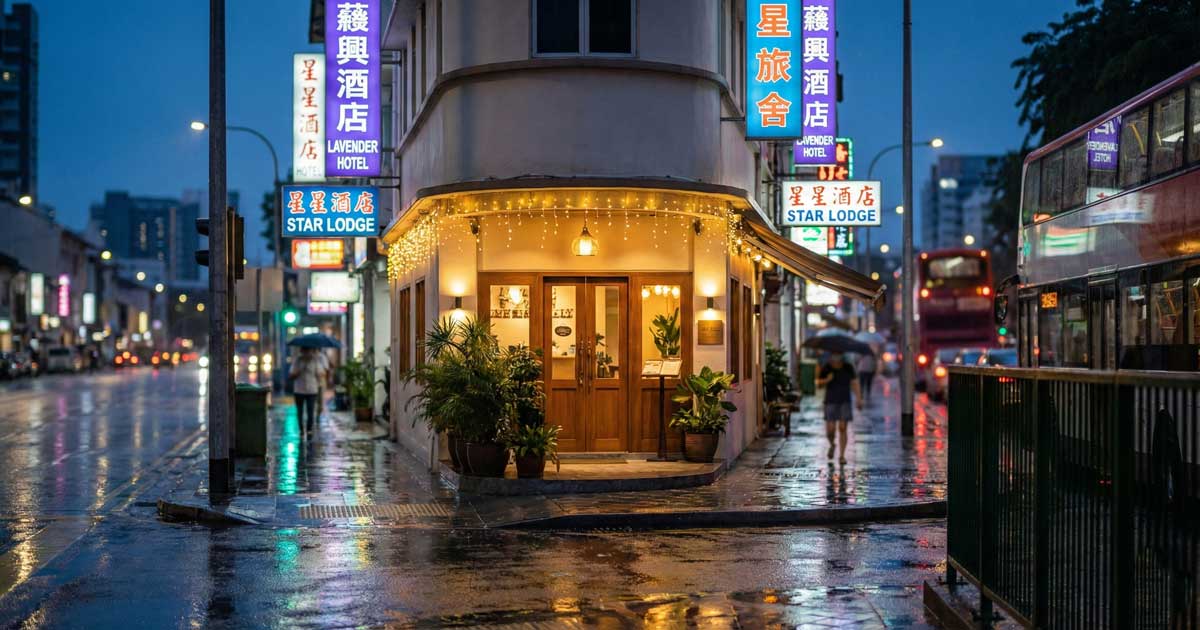
Here's an example. The Arton Boutique Hotel in Singapore — a 3-star property in the Lavender district. On Trip.com, it has an 8.2 "Very Good" rating with 1,071 reviews. It carries highlight badges including "Sparkling Clean" and "Ideal Location."

The same hotel on Booking.com: 7.4 "Good" with 649 reviews. The rating drops noticeably — but still looks acceptable.

Here's what DoNotStay found when it analyzed those Booking.com reviews:

This hotel has serious health and safety issues that make it unsuitable for guests. Multiple recent reports confirm cockroaches and insects in rooms, creating an unsanitary environment. The combination of extremely poor soundproofing, dirty linens, and cramped windowless rooms creates an unpleasant stay experience that even the good location cannot redeem.
🚩 Red Flags
"Sparkling Clean" — except six guests reported cockroaches and insects in their rooms. Eight guests described dirty sheets, stained pillows, and rooms that hadn't been cleaned. Twelve guests said the walls were so thin they could hear every word their neighbors said, including one guest who described hearing "night couple exercise" from the next room.
A hotel that Trip.com labels "Sparkling Clean" has cockroach reports and yellowed pillows that look like they haven't been changed in years. The badge doesn't mean what you think it means.
Why Trip.com ratings differ from other platforms
If you check the same hotel on Trip.com and Booking.com, you'll often see different scores. The Arton Boutique was 8.2 on Trip.com and 7.4 on Booking.com — a full point gap for the same property. This happens because the platforms have different review pools, different user bases, and different scoring systems.
Different travelers, different expectations. Trip.com's user base skews heavily toward Asia-Pacific travelers. Booking.com draws a more global audience. Cultural differences in review behavior — what counts as a 7 versus a 9 — affect the average scores.
Highlight badges are algorithmic, not inspected. Nobody from Trip.com visited the Arton Boutique Hotel and confirmed it was "Sparkling Clean." These badges are generated from review data and property attributes. A hotel can earn a cleanliness badge while recent guests are finding cockroaches — because the badge reflects the average, not the exceptions.
Review counts can be misleading. The Arton had 1,071 reviews on Trip.com versus 649 on Booking.com. More reviews on Trip.com doesn't mean better information — it depends on the detail and recency of those reviews. Booking.com's review system encourages longer, more detailed responses that reveal specific problems.
The "We Price Match" badge is about price, not quality. Both Trip.com and Booking.com display price match guarantees. This creates a false sense of equivalence — as if both platforms are vouching for the hotel equally. They're only matching on price. Neither is matching on cleanliness, safety, or pest control.
What to do before booking on Trip.com
Trip.com is a legitimate platform with competitive prices, especially for Asian destinations. But before you book, take one extra step.
Cross-reference on Booking.com. Look up the same hotel on Booking.com. Pay attention to the rating difference — if a hotel is a full point lower on Booking.com, that's a signal worth investigating.
Ignore the highlight badges. "Sparkling Clean" and "Ideal Location" are generated from aggregate data, not from inspections. They don't protect you from cockroaches or dirty sheets.
Read the worst reviews on both platforms. Sort by lowest rating and look for patterns. A single complaint about noise is bad luck. Twelve guests mentioning thin walls over two years is a structural problem.
Check review dates. A cockroach complaint from three years ago might be resolved. Eight cleanliness complaints spread across recent years suggests an ongoing issue.
Or check with DoNotStay in 30 seconds. I built DoNotStay as a free Chrome extension that analyzes every detailed review on a Booking.com hotel page and flags specific problems — pests, noise, cleanliness, scams, safety issues — with evidence from actual guest reviews.
Found a hotel on Trip.com? Look it up on Booking.com and run DoNotStay before you book. It takes 30 seconds and it might save you from a cockroach encounter in Singapore.
So, is Trip.com safe?
Yes. Trip.com is a safe, legitimate platform backed by one of the largest travel companies in the world. Your booking is real. Your payment is secure. The company processes millions of reservations per year.
But Trip.com is a booking platform, not a hotel quality guarantee. A "Sparkling Clean" badge doesn't mean the hotel is actually clean. An 8.2 rating doesn't mean you won't find cockroaches in your room. And highlight badges are generated by algorithms, not by anyone who's actually stayed there.
The platform is safe. The hotel might not be. Check the reviews before you book.
Check any hotel in 30 seconds. Add DoNotStay to Chrome — free →