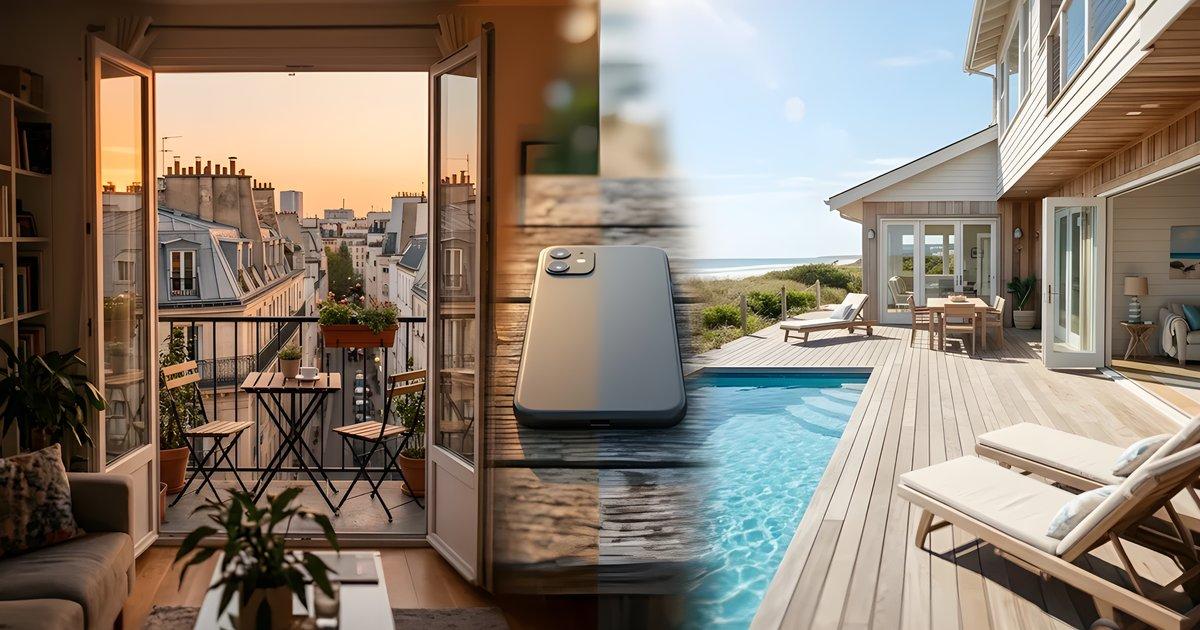
Airbnb and Vrbo are the two biggest vacation rental platforms, and they often list the same homes. So which one should you book on?
The quick answer
Airbnb is better for city stays, solo trips and short breaks. It has far more listings, including private rooms, and since 2026 the price you see is the price you pay.
Vrbo is better for families and groups who want a whole house. It only lists entire homes, and its search is built around holiday homes rather than city apartments.
Neither platform inspects the homes it lists. That's why I built DoNotStay, a free Chrome extension that reads a listing's guest reviews and flags mold, pests, safety problems and misleading listings before you book. It works on Airbnb listings directly.
Who owns them
Airbnb is its own public company (NASDAQ: ABNB), founded in 2008, with more than 8 million listings worldwide.
Vrbo is owned by Expedia Group (NASDAQ: EXPE), the company behind Expedia and Hotels.com. It started in 1995 as Vacation Rentals by Owner and has more than 2 million properties. Read more in is Vrbo legit?
Both are legitimate. Your payment is secure on either, as long as you pay through the platform.
Fees: the biggest change in 2026
Airbnb no longer adds a guest service fee for most stays. Airbnb has moved all hosts to a single fee of 15.5% that comes out of the host's payout — by September 15, 2026 outside the EU and October 13, 2026 inside it. The nightly price and cleaning fee you see are what you pay, before taxes.
Vrbo still charges guests a service fee at checkout. Vrbo doesn't publish a fixed rate; it's a percentage of the booking that varies with the amount, typically between 6% and 15%. From October 29, 2026, Vrbo also moved hosts to a single 12% commission.
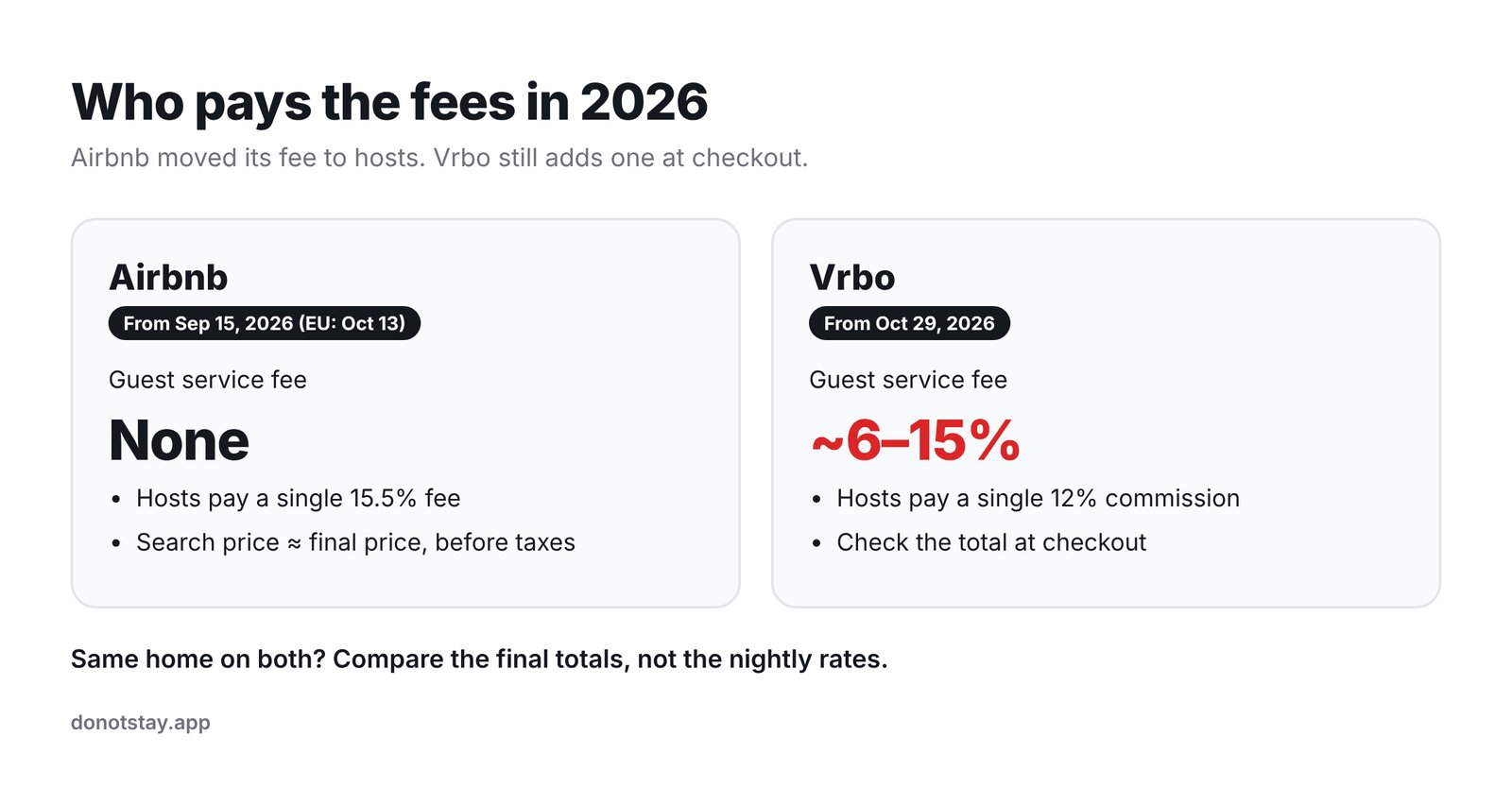
What this means for you: on Airbnb the search price is close to the final price. On Vrbo, check the total at checkout. And when the same home is on both, compare the final totals — not the nightly rates.
Guest protection
Airbnb's AirCover for guests covers problems like a host cancelling at the last minute, not being able to get in, or a listing that's significantly different from its description. Airbnb will help you rebook somewhere comparable or give you a refund. Report problems quickly, within 72 hours of finding them.
Vrbo's guarantee, now called VrboCare (formerly Book with Confidence), covers similar ground: host cancellations, check-in problems, payment fraud, and homes that are significantly different from the listing. Vrbo's agents help you rebook.
Both only protect bookings paid through the platform. Pay a host by wire transfer or Zelle and you're on your own. Consumer group Checkbook has said Airbnb offers renters the most protection when a listing turns out to be fake.
What neither platform checks
Neither Airbnb nor Vrbo inspects homes before you arrive. Hosts write the descriptions and choose the photos. The only independent check is what previous guests wrote — and the problems that matter most, like mold, pests, or a broken air conditioner in August, are usually buried in a few reviews among many happy ones.
Read the worst reviews first. Sort by lowest rating and look for problems more than one guest mentions.
Check how far back the reviews go. A listing with reviews spread over months or years is far harder to fake.
If the home is on both sites, read both sets of reviews. You'll see more of its history.
Run DoNotStay on the Airbnb listing. DoNotStay reads every review and flags mold, pests, safety problems and misleading listings, with quotes from the guests who reported them.
So, Airbnb or Vrbo?
Pick Airbnb for city stays and short trips, and for the simpler pricing. Pick Vrbo when you need a whole house for a family or a group, and check the final total at checkout.
Whichever you choose, pay through the platform and read the reviews before you book. The platform protects your payment. Only the reviews tell you about the home.
Check any listing in 30 seconds. Add DoNotStay to Chrome — free →