Airbnb is one of the most popular travel platforms in the world. Over 8 million active listings across 220+ countries. More than a million guests checking in every single day. If you're reading this, you're probably not questioning whether Airbnb exists — you're wondering whether it's safe to use.
The short answer: yes, Airbnb is a legitimate platform and the vast majority of stays go smoothly. But Airbnb operates with significantly fewer safety regulations than hotels — and when things go wrong, they can go very wrong.
Airbnb is legitimate — here's the scale
Airbnb is a publicly traded company (NASDAQ: ABNB) generating $11.1 billion in annual revenue. It has more than 5 million hosts and processed roughly 491 million nights booked in 2024. The platform has been operating since 2008 and went public in 2020.
Your booking is real. Your payment is secure — Airbnb holds it until 24 hours after check-in. The company is not a scam.
But the question isn't whether Airbnb is legitimate. It's whether the property you're staying in is safe.
The safety number Airbnb doesn't explain
Airbnb claims fewer than 0.1% of stays result in a reported safety issue. That sounds reassuring until you do the math: applied to 491 million nights booked in 2024, that's potentially hundreds of thousands of incidents annually.
A 2025 academic study analyzing 4.8 million Airbnb reviews across five major US cities found that 0.5% of guest reviews mention safety concerns — five times Airbnb's headline figure. Guests who personally experienced neighborhood safety issues were 60% less likely to book on Airbnb again.
Airbnb has never published a comprehensive safety report detailing injury and death statistics. Its February 2025 Global Quality Report — the first of its kind — covered listing quality, removal of 400,000+ low-quality properties, and host cancellation rates. It did not include safety incident data.
Bloomberg's 2021 investigation revealed that Airbnb maintains a secretive safety team that spends roughly $50 million per year in payouts to handle severe incidents — from settling with assault victims to managing crime scenes. One rape victim reportedly received a $7 million settlement with a non-disclosure agreement.
The deadly incidents hotels are designed to prevent
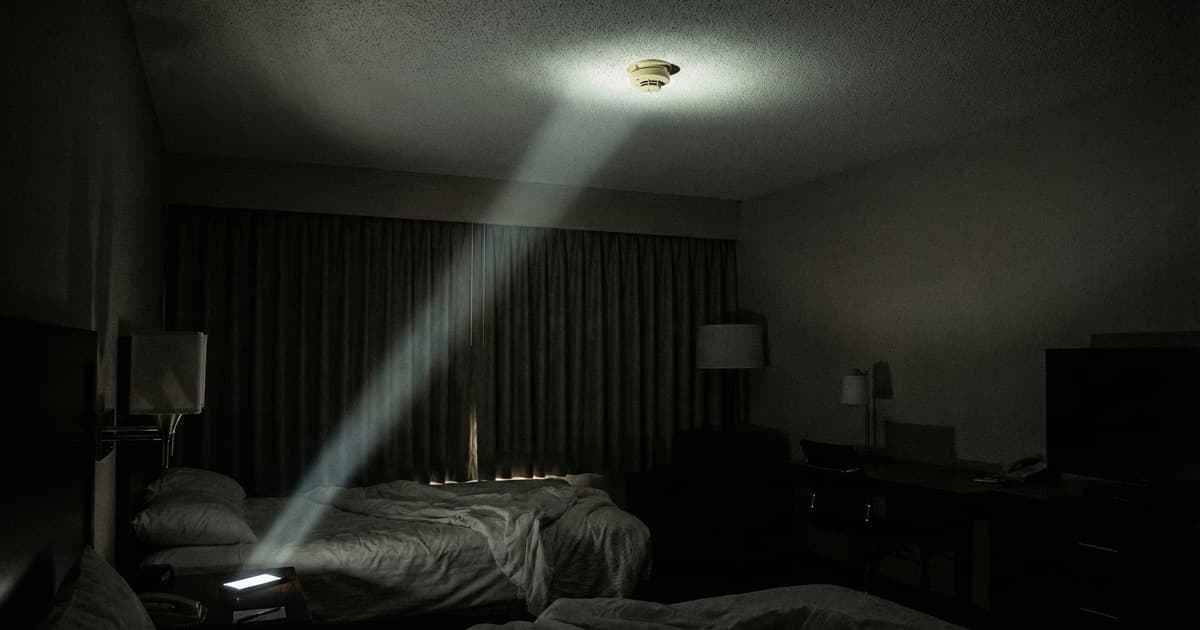
The worst Airbnb safety failures involve carbon monoxide, fire, and gun violence — exactly the hazards that hotel building codes and fire regulations exist to address.
Carbon monoxide is the deadliest systemic risk. NBC News identified 19 deaths at Airbnb properties from CO poisoning between 2013 and 2023, all outside the United States. In October 2022, three Americans died from CO poisoning in a Mexico City Airbnb with a faulty gas boiler. In February 2025, two Texas siblings died the same way in another Mexico City Airbnb. Airbnb pledged in 2014 to mandate CO detectors in all listings. That mandate was never implemented. As of 2024, only about 57.5% of US listings report having CO detectors at all.
A cabin fire in Wisconsin killed six family members in June 2024, including three children ages 2, 5, and 8. The subsequent lawsuit alleges the cabin lacked functioning smoke and CO detectors and was never licensed or inspected. The family had paid over $10,000 for a one-week rental.
Party-related shootings continue despite the permanent ban. In November 2025, an 18-year-old was killed at an Ohio Airbnb party that drew 250–300 people. In August 2024, a San Francisco court ruled that Airbnb can be held legally liable for a shooting death at one of its properties — the first US case to establish this precedent.
Hotels have a structural safety advantage
This isn't opinion — it's regulation. Hotels operate under comprehensive fire, building, health, and accessibility codes that short-term rentals largely escape.
The National Fire Protection Association has required automatic sprinkler systems in all new hotels since 1991. The federal Hotel and Motel Fire Safety Act mandates sprinklers and hard-wired smoke alarms. Hotels undergo regular fire inspections with integrated testing of sprinklers, alarms, and emergency systems. They maintain posted escape routes, fire doors, emergency lighting, and fire extinguishers.
Airbnb properties, classified as residential rather than commercial occupancies, face none of these requirements in most jurisdictions. A Johns Hopkins study found that only 80% of Airbnb listings reported smoke detectors, 56% CO detectors, 42% fire extinguishers, and 36% first-aid kits.
Hotels also have 24/7 on-site staff, security cameras in common areas, standardized maintenance schedules, and liability insurance that dwarfs Airbnb's coverage. The US Fire Administration states directly that homes used as short-term rentals are not regulated to the same extent as hotels and motels.
What AirCover actually covers (and doesn't)
Airbnb's primary guest protection is AirCover, included free with every booking. It provides a booking protection guarantee, a check-in guarantee, a get-what-you-booked guarantee, and a 24-hour safety line.
What AirCover doesn't cover: personal injury, minor inconveniences, or travel disruptions unrelated to the property. It's explicitly not insurance. The host liability coverage ($1 million per occurrence) protects hosts, not guests. And AirCover contains a class action waiver preventing collective legal action.
Guests must report issues within 72 hours of discovery and contact Airbnb before rebooking on their own. Miss that window and you lose your protection — similar to the refund time limit trap on Booking.com that caught me in Da Nang.
Airbnb scams are getting smarter
Airbnb removed or blocked over 215,000 fraudulent listings in 2023, and another 216,000 in 2024. The FTC received nearly 10,000 vacation rental fraud reports in Q2 2025 alone.
Fake listings use stolen photos or AI-generated interiors to advertise properties that don't exist. The $8.5 million federal fraud case against two operators exposed a bait-and-switch operation spanning nearly 100 properties in 10 states, with over 10,000 fraudulent cancellations.
Bait-and-switch remains the most common pattern. Hosts advertise a desirable property, then claim it's unavailable before check-in and offer an inferior substitute. Vice's 2019 investigation uncovered an organized nationwide network running this scheme and received nearly 1,000 emails from affected guests.
AI-powered fake damage claims are the newest threat. Hosts submit AI-generated photos as "evidence" of damage to charge guests thousands of dollars. Airbnb initially sides with the host until guests fight back with their own documentation. Legal experts now recommend uncut video walkthroughs at check-in and checkout.
Off-platform payment requests are always a scam. Any host asking for Venmo, Zelle, or wire transfer should be reported immediately. Airbnb's payment hold is your primary financial protection — bypass it and you have zero recourse.
The hidden camera problem
Airbnb banned all indoor cameras globally in April 2024. Despite this, a 2025 survey found 55% of hosts admit to still using them. CNN uncovered 35,000+ customer support tickets about surveillance devices since 2013.
We wrote a complete guide to finding hidden cameras in hotels and Airbnbs — including a five-minute detection sweep you can do with just your phone.
The party ban is working — mostly
Airbnb permanently banned parties in June 2022 and deployed AI screening that has blocked over 1.4 million guests from potentially problematic bookings. Party reports dropped over 50% in the first two years.
But it hasn't eliminated party violence entirely. The fatal shootings in Ohio, Florida, and North Carolina in 2025 show that determined bad actors can still circumvent screening — particularly when events are promoted on social media.
Background checks have serious gaps
Background checks are limited to US and India-based users, covering public criminal records and sex offender registries. Only the booking guest is screened — other members of the travel party are not. Airbnb warns users directly: background checks shouldn't be relied on as a guarantee.
Identity verification became mandatory for all users globally in June 2023. But verification confirms someone's identity documents match — it doesn't confirm they're trustworthy.
How to stay safe on Airbnb
Airbnb is safe enough for most travelers most of the time. But unlike hotels, the safety burden falls on you. Here's how to reduce your risk.
Verify the listing before booking. Reverse image search the photos. Check the location on Google Street View. Be skeptical of unusually low prices. New listings with zero reviews carry inherent risk.
Read reviews strategically. Focus on 2-, 3-, and 4-star reviews — they're the most honest. Search for keywords like "safe," "clean," "accurate," and "neighborhood." Properties with hundreds of reviews are much harder to fake.
Book and pay only through Airbnb. The payment hold is your financial protection. Any host asking for off-platform payment is either a scammer or removing your safety net.
Document the property on arrival. Take continuous, uncut video of every room. Send photos of pre-existing damage to the host via Airbnb messaging immediately. This is your defense against fake damage claims.
Check for hidden cameras. Five-minute sweep: flashlight scan in the dark, phone IR detection, WiFi network scan with Fing, mirror fingernail test. Full guide here.
Know your AirCover deadlines. You have 72 hours to report issues. Don't let hosts stall you past this window.
Check the building on Google Maps before you book. This is the tip nobody gives. Airbnb listings typically have a handful of reviews. But the actual building often has dozens or hundreds of Google Maps reviews — with photos and videos. I've twice received Airbnb booking details, searched the building on Google Maps, and found it plastered with complaints about pests, mold, broken elevators, and hostile staff — with photos that made me not want to set foot in the place. None of that was visible on Airbnb. I cut my losses both times rather than check in. In Germany, I checked out early from an Airbnb that didn't match expectations, and the host locked me out of the apartment in winter before I could arrange an alternative. Airbnb support was unhelpful in all three situations. The lesson: Airbnb's review pool is thin. Google Maps often has the real picture.
Or skip the uncertainty entirely
If you're comparing an Airbnb to a hotel, know what you're trading. Hotels give you fire sprinklers, on-site staff, regular inspections, and standardized safety protocols. Airbnbs give you more space, a homely feel, and a different experience — but with a regulatory gap that puts more responsibility on you.
If you're booking a hotel, check it on Booking.com and run DoNotStay before you commit. It's a free Chrome extension that analyzes every detailed review and flags the problems that ratings hide — pests, mold, noise, scams, hidden cameras, and more.
The platform is safe. The property might not be. Check before you book.
Check any hotel in 30 seconds. Add DoNotStay to Chrome — free →