Kayak is one of the most popular ways to compare flights and hotels. But when you click "View Deal" and land on a site you've never heard of, it's fair to wonder whether you can trust it.
The short answer: yes, Kayak is legit. But Kayak is a search engine, not a travel agent. The company you actually pay — and the hotel you actually stay at — are what you need to check.
To check the hotel itself, look it up on Booking.com and run DoNotStay, a free Chrome extension that reads every detailed guest review and flags bed bugs, mold, noise and other red flags before you book.
Kayak is legit — here's who's behind it
Kayak was founded in 2004 by Steve Hafner and Paul English. Booking Holdings (NASDAQ: BKNG) bought it in 2013 — the same company that owns Booking.com, Priceline and Agoda.
Kayak also runs a family of other search sites, including momondo, Cheapflights, HotelsCombined and SWOODOO.
Searching on Kayak is free. It makes money when a travel site pays it for sending you over, and from ads. The prices you see come from the providers, and Kayak doesn't add a fee on top.
Kayak doesn't sell you the trip
This is the part people miss. When you click a deal on Kayak, you're usually sent to another website — an airline, a hotel chain, a big booking site, or a smaller online travel agency — and you book and pay there.
Sometimes you'll see a "Book on KAYAK" option. Even then, the booking is with a third-party provider; Kayak just lets you complete it without leaving its site.
That matters when something goes wrong. Changes, cancellations and refunds are handled by whoever sold you the booking, not by Kayak. If the cheapest price came from an agency you've never heard of, that agency is who you'll be dealing with.
The real risk: the hotel behind the deal
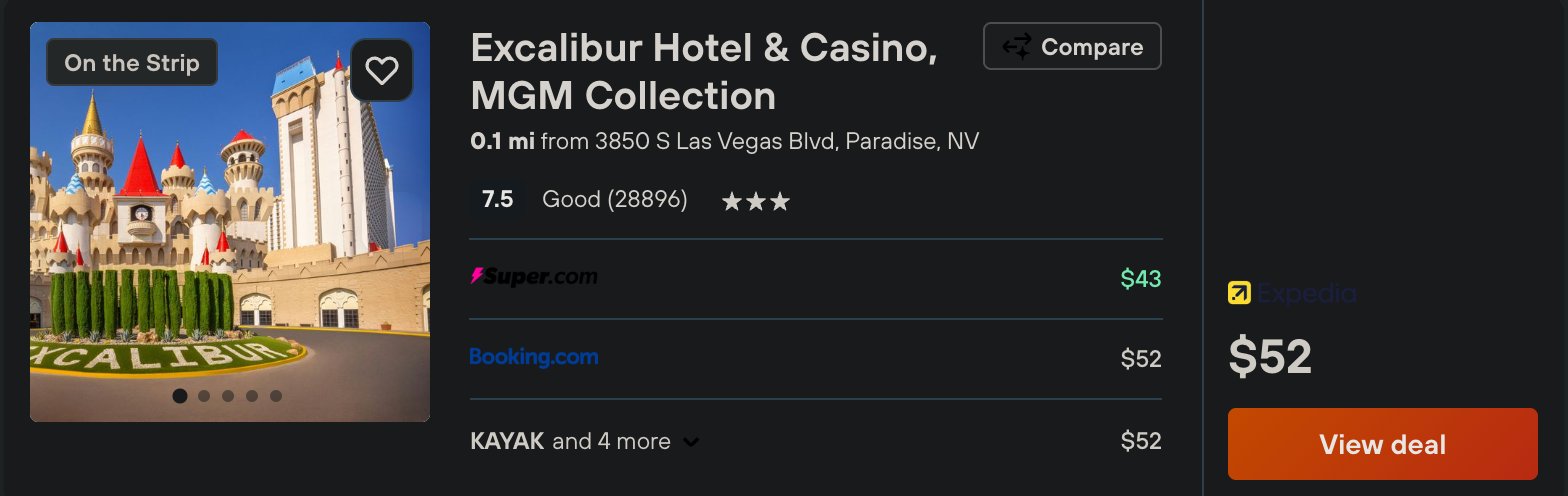
Kayak shows you a price and a score. Neither tells you whether the room has bed bugs or whether the front desk will add charges you didn't agree to.
Take Excalibur, one of the best-known hotels on the Las Vegas Strip, listed on every major booking site. Here's what DoNotStay found when it analyzed its Booking.com reviews:

This hotel presents serious health and safety risks with confirmed bedbug infestations as recently as June 2025, widespread billing fraud including unauthorized charges up to $2000, and rooms contaminated with blood, mold, and previous guests' belongings. The pattern of security failures, including strangers accessing occupied rooms, combined with systemic cleanliness issues makes this property fundamentally unsafe regardless of its Strip location.
🚩 Red Flags
Guests reported bed bugs, rooms smelling of mold, and unauthorized charges on their cards — one described at least ten charges they hadn't agreed to. A famous name and a Strip location don't tell you that. The reviews do.
How to use Kayak without getting burned
Check who you're booking with. Before you click, look at which site the deal comes from. A hotel's own site or a big booking platform is easier to deal with if plans change.
Compare the total price. A low headline price can grow once taxes, resort fees and baggage fees are added on the provider's site.
Pay with a credit card. It gives you a chargeback option if a provider won't refund you.
Read the worst reviews. Sort by lowest score and look for problems more than one guest mentions: pests, mold, theft, billing disputes.
Or run DoNotStay on the hotel. I built DoNotStay as a free Chrome extension that reads every detailed review on a Booking.com hotel page and flags bed bugs, mold, scams, noise and safety problems, with quotes from the guests who reported them. Found a deal on Kayak? Look the hotel up on Booking.com and run it before you book.
So, is Kayak legit?
Yes. Kayak is a legitimate search engine owned by Booking Holdings, and it doesn't charge you anything.
But Kayak finds deals — it doesn't stand behind them. Check who's actually selling you the booking, and check the hotel's reviews before you pay.
Check any hotel in 30 seconds. Add DoNotStay to Chrome — free →